
Periodontal Disease Treatment – Jeffersonville, IN
Gentle Relief for Sensitive, Bleeding Gums
When it comes to your oral health, taking care of your gums is actually equally as important as caring for your teeth. Why? Poor oral hygiene contributes to not only tooth decay, but also a gum infection called periodontal disease. Also known as gum disease, this all-to-common oral health issue can lead to swelling, bleeding, tenderness, and gum recession. Eventually, it can result in tooth loss! If you or someone you know is experiencing discomfort in your gums, reach out to our Limestone Dentistry team right away. The sooner Dr. Eric Thornton can restore your oral health with periodontal disease treatment in Jeffersonville, IN, the better!
Why Choose Limestone Dentistry for Periodontal Disease Treatment?
- Insurance-Friendly Dental Office
- Soothing Nitrous Oxide Sedation Available
- Compassionate, Skilled Dentist & Dental Hygienists
What is Periodontal Disease?

Periodontal (gum) disease usually develops when bacteria-filled plaque and tartar build up on the teeth under the gumline, causing the nearby tissue to become irritated and inflamed. The initial stage of periodontal disease is called gingivitis. At this point, the infection is noticeable but manageable. It can typically be reversed with an improved oral hygiene routine. However, if left untreated, it can progress into periodontitis, the more advanced form of gum disease. Periodontitis can cause irreversible damage to your gums as well as your jawbone. In fact, periodontitis is the leading cause of tooth loss in the United States! While periodontitis cannot be completely reversed, it can be controlled with periodontal maintenance from your dentist.
Symptoms of Periodontal Disease
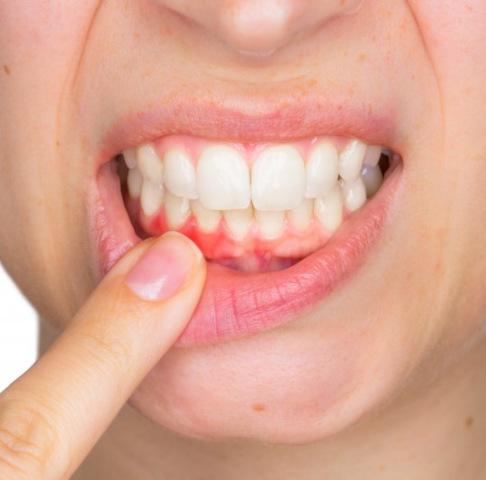
The best way to protect your smile from gum disease is to spot and stop it as early as possible. Here are some of the most common symptoms caused by gingivitis:
- Halitosis (chronic bad breath)
- Puffy, bright red, or tender gums
- Gums that bleed easily when brushing or flossing
Meanwhile, signs of periodontitis include:
- Tooth sensitivity caused by gum recession
- Pain while chewing
- Loose permanent teeth
- Changes in your bite or the fit of restorations like dentures
- The loss of one or more permanent teeth
How Do We Treat Periodontal Disease?

If you suspect you may have periodontal disease, come see us right away! Dr. Thornton will also check for signs of gingivitis or periodontitis during each of your routine checkups. Should indications of periodontal disease be discovered, we’ll investigate thoroughly to understand the severity of the condition. Based on our findings, Dr. Thornton will work with you to put together a personalized treatment plan to restore your gum health. Typically, we can accomplish this with a treatment called scaling and root planing (SRP).
Scaling & Root Planing
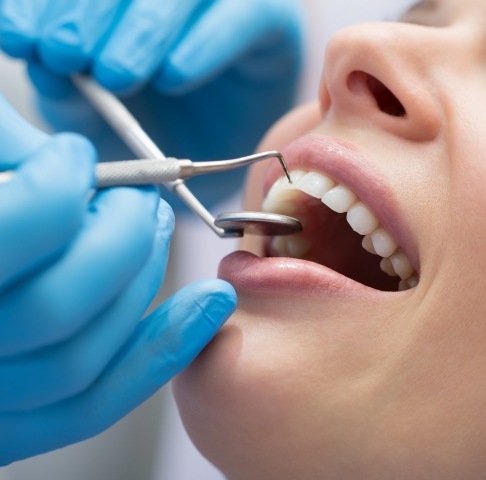
Scaling and root planing is a two-part, non-surgical process designed to eliminate infection in the gum tissue. Scaling involves using specialized tools to eliminate plaque and tartar from the area. Then comes root planing, in which we smooth out the surfaces of the roots of your teeth. Not only does this encourage a quick recovery, but it also discourages plaque from accumulating in the area, decreasing your risk of reinfection.
Arestin Antibiotic Treatment
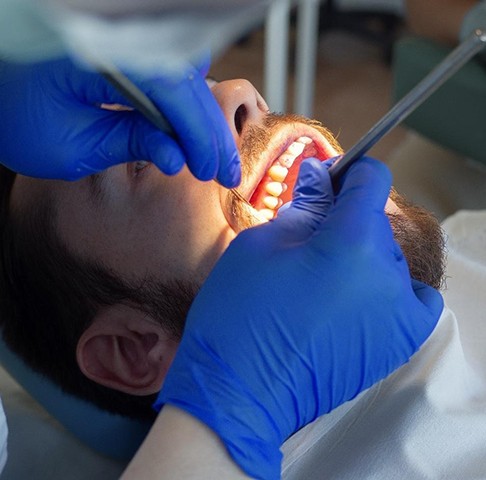
If gum disease is left untreated for too long, scaling and root planing alone may not be enough to combat the infection. To fully eliminate the harmful bacteria in your gums and protect your smile, we may recommend Arestin antibiotic treatment for gum disease. These powerful antibiotics are used to target the infection directly at its source within the periodontal pockets.
What Is Arestin Antibiotic Treatment?

Arestin is a minocycline antibiotic, which is a medication that’s specifically designed to fight bacteria associated with gum disease. It’s applied directly into the infected gum pockets to provide a more precise and targeted treatment than what can be accomplished with traditional oral antibiotics.
Since Arestin can be delivered exactly where it’s needed, this treatment makes a tremendous difference in controlling bacterial growth beneath the gumline. This is especially important since that area of the mouth is so difficult to keep clean with routine at-home brushing and flossing.
How Does Arestin Work?
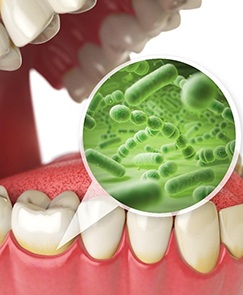
In most cases, Arestin is used alongside scaling and root planing. Arestin is designed to adhere to the gum tissue and the surface of the teeth then get to work right away.
The medication will release the antibiotics slowly and steadily over time, continuously fighting the gum infection even after your appointment is over. This sustained release aids in reducing inflammation, shrinking gum pocket depths, and encouraging a healthier environment for the gum tissue to reattach to the teeth. Dr. Thornton will give you personalized instructions that may involve reduced brushing and flossing in the treated area to help ensure the antibiotics stay in place. With the proper care, Arestin can continue to fight gum disease for up to 30 days!
Who Should Get Arestin Antibiotic Treatment?

Dr. Thornton typically recommends Arestin for patients with moderate to advanced gum disease, or patients with particularly deep gum pockets that may not respond fully to scaling and root planing alone. Nearly any patient with gum disease is a good candidate for Arestin, but we don’t recommend it for patients who are pregnant or nursing, very young, or who are allergic to tetracyclines.
Like with any treatment, the best way to discover if Arestin is the best choice for your unique smile is to visit us for an appointment. Dr. Thornton will be happy to evaluate the severity of your gum disease, the depth of your gum pockets, and the status of your overall oral health to help you make the best choice for your smile. When combined with good at-home oral hygiene habits and routine periodontal maintenance at our office, Arestin can play an important role in stabilizing your gum health and stopping gum disease in its tracks.